

Free Amazon PPC Calculator: ACoS, Target CPC, ROAS + Profit Per Order
Stop guessing. Use this Amazon PPC calculator to find target CPC, break-even CPC, ROAS, expected clicks/day, and what you can spend without losing money.
What Does the Amazon PPC Calculator Do?
This free Amazon PPC calculator is built for one job: helping you set bids without accidentally advertising at a loss. Once you know your break-even ACoS and break-even CPC, it gets a lot easier to pick a starting bid, scale your ad spend, and stay profitable while you grow your campaigns.
To use it, enter your product and campaign numbers (price, fees, cost of goods, and a few ad assumptions), then hit Calculate. In seconds, you’ll see an estimate of your most important PPC metrics, like profit per order, break-even ACoS, target CPC, break-even CPC, expected clicks per day, and target ROAS. If you want more control, the Advanced Options let you set a daily clicks goal you can prioritize your campaign around.
If you’re new to Amazon ads, I recommend starting simple: run the calculator with a conservative conversion rate (typically around 8-10%), then adjust one variable at a time (conversion rate, CPC, or ACoS target) until the numbers match what you’re seeing in your account. This can be a good way to tell the difference between a campaign problem and a product pricing/margins problem.
If at any point you’re not sure what a field or metric means, just hover over the “?” tooltip beside it. Every input and output includes a quick description to help you understand what the number means and how it can affect your campaign.
How to Use the Free Amazon PPC Calculator
I designed this tool to be super easy to use, and it takes less than a minute to get your results. Here’s how it works:
Step 1: Enter your campaign and product details
- Selling Price: The price that customers usually pay for your product at checkout
- Total Unit Cost Before Ads: Your total cost of goods sold, including Amazon fees, manufacturing cost, shipping, customs, and any other unit-related costs
- Conversion Rate (%): This is the percent of ad clicks that turn into orders. If you’re not sure, or you don’t have enough data yet, a good starting point it 10%
- Target ACoS (%): This is the percent of ad sales you are willing to spend on ads. If you don’t have a specific target, a good default setting is around 30%
- Daily Budget: Enter the amount of money you plan to spend per day on your ad campaign
Step 2: Open Advanced Settings (optional)
To fine-tune your campaign settings, you can click the “Show Advanced Options” toggle. Here you’ll find:
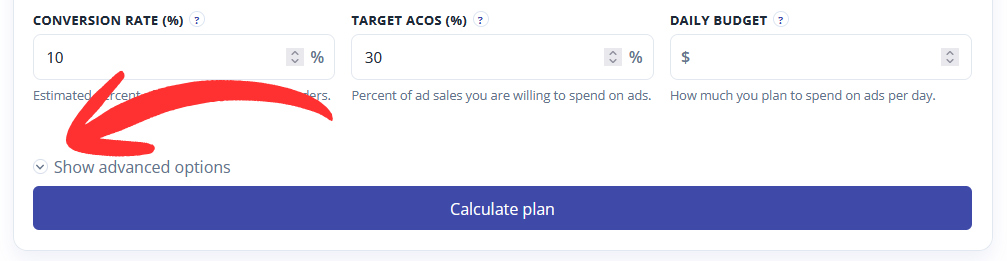
- Units Per Order (optional): Leave this at 1.0 unless customers usually buy more than one unit at a time, like bundles, multipacks, or repeat-use products.
- Set Clicks/Day Manually (optional): Enter a daily click target if you want the tool to estimate a Suggested Daily Budget based on your click goal.
Step 3: Calculate or try sample data
Once your numbers are entered, click Calculate Plan.
The tool will generate your PPC targets and guardrails right away, including: Profit per Order (at Target ACOS), Break-Even ACOS, Target CPC, Break-Even CPC, Expected Clicks Per Day, Target ROAS (Secondary), and Suggested Daily Budget (only if you entered a manual clicks/day goal)
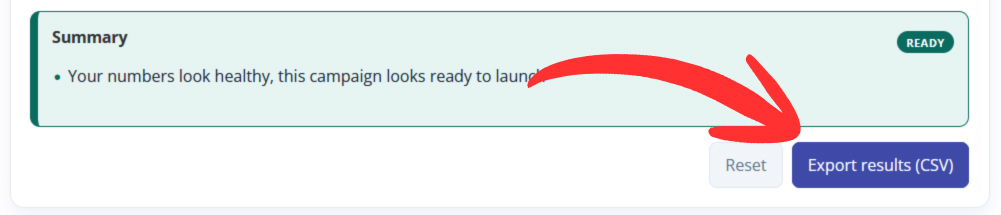
The tool will also display a Summary status based on the generated metrics. There are three possible results: Ready, Caution, and Warning.
“Ready” signifies that the metrics all look healthy, and your campaign is ready to launch. “Caution” is a signal that one or more of the results is close to break-even or has thin margins. You may want to make edits to your campaign before launching. Finally, “Warning” is a signal that, based on the numbers you submitted, your campaign will not be profitable, and you should make significant changes before moving forward.
Once you’re finished, you can click the “Export Results” button to download an organized CSV file with your full results, or click “Reset” to clear all data from the tool and start again.
Amazon Advertising Metrics Explained
The Amazon PPC Calculator uses a handful of common advertising terms to help you plan and optimize your ad campaigns. If you’re new to Amazon Ads, here’s a simple breakdown of what these numbers mean and why they matter.
ACoS (Advertising Cost of Sale)
ACoS tells you how much you’re spending on ads to generate each dollar of ad-driven sales.
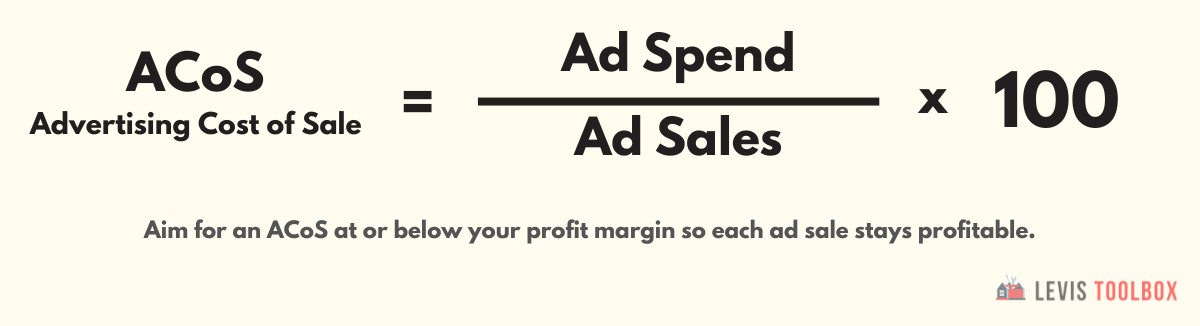
If you spend $20 to make $100 in ad sales, your ACoS is 20%. A lower ACoS usually means your ads are more efficient. Just remember that there’s no perfect number; what matters is how your ACoS compares to your profit margin. If it’s higher than your margin, you’re likely losing money on each sale.
Target CPC (Cost Per Click)
Target CPC tells you the price per click that still meets your ACoS goal. The calculator uses your target ACoS, your conversion rate, and your revenue per order to calculate it.
Start your bids at or a touch below this number. Then let your campaign run long enough to gather data. If your campaigns ACoS is higher than your goal, you can try lower bids or optimizing your product listing. If performance looks healthy, you can test small increases to your bids.
Break-Even CPC (Cost Per Click)
Break-Even CPC is the highest click price you can pay before profit from ad sales drops to zero. It comes from your price, your all-in unit cost, and your conversion rate.
When your actual ACoS is higher than this value, you lose money on ad-attributed orders. Use Break-Even ACoS as a guardrail when you choose a Target ACoS and when you review performance.
Target ROAS
Target ROAS shows how many dollars in sales you want for each dollar spent on ads. It is calculated as ad-attributed revenue divided by ad spend. For example, a ROAS of 3 means you would get $3 in sales for every $1 in ad spend.
If your live ROAS is below target, lower bids or improve your listing so more clicks turn into orders. If it is above target and profit per order looks healthy, you can consider increasing your ad budget in small steps to scale your campaign.
Conversion Rate (%)
Your conversion rate measures how well your product page turns clicks into sales.
If 100 people click your ad and 10 buy, your conversion rate is 10%. Strong conversion rates help you spend less per sale and keep ACoS under control. Weak conversion rates usually mean one of two things: you’re targeting the wrong keywords, or your product page needs improvement. For a detailed guide on how to improve your conversion rates, check out our in-depth article on Amazon Listing Optimization.
Frequently Asked Questions (FAQs)
What does an Amazon PPC Calculator do?
An Amazon PPC Calculator can help you make smarter decisions before launching your ad campaigns. You can estimate break-even ACoS, break-even CPC, and a safer “target CPC” so you know what you can afford to pay per click without eating into your margins. I recommend using it for quick planning, and then re-running the math with real campaign data once your campaign is live.
What is ACoS in Amazon PPC (and how do you calculate it)?
ACoS (Advertising Cost of Sales) tells you how expensive your ads are relative to the sales they generate. If you spend $20 on ads and those ads drive $100 in sales, your ACoS is 20%. Lower ACoS is usually better for profit; a higher ACoS can make sense temporarily if you’re launching or trying to rank.
The formula is: ACoS = (Ad spend / Ad revenue) * 100
How do I calculate my break-even ACoS?
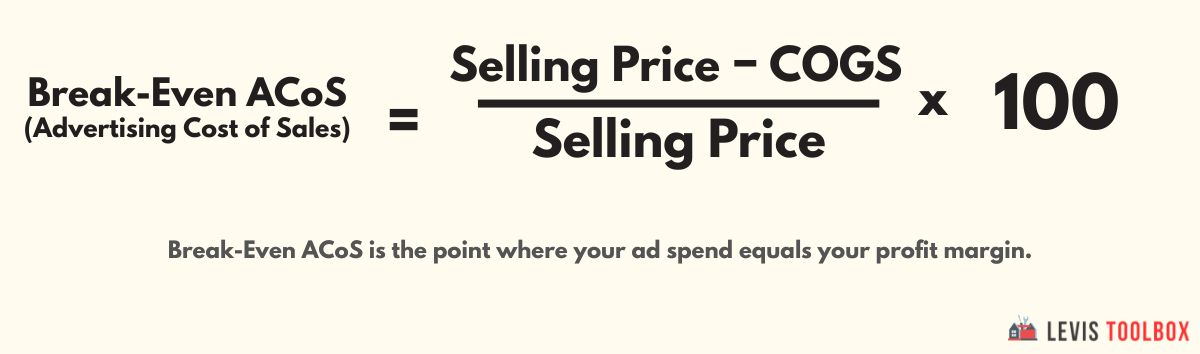
Break-even ACoS is the point where your ads stop being profitable, and you start losing money. A simple way to calculate it is to take the profit you have left after product costs and Amazon fees, divide it by your product price, then multiply the result by 100. The formula looks like this:
Break-even ACoS (%) = ((Price – COGS – Amazon fees) / Price) * 100
When creating a target ACoS, always make sure it is set safely below break-even, leaving room for potential returns, promotions, or other overhead costs.
What is ROAS, and how is it different from ACoS?
ROAS (Return on Ad Spend) is the inverse of ACoS. ROAS tells you how many dollars of attributed sales you get per $1 of ad spend, while ACoS tells you what percentage of those sales went to ads.
The formula for calculating ROAS is: Ad revenue / Ad spend
How can I lower ACoS without killing sales?
A good way to start lowering your ACoS is to focus on issues that can improve your conversion rate and reduce wasted ad clicks:
- Optimize your product listing (main image, product price, bullets, A+ content, reviews)
- Download your search term report and update your negative keyword list
- Separate your branded vs non-branded keywords and separate match types, so one bucket doesn’t poison the rest
- Reduce your bids on keywords with poor conversions, not just those with high CPC’s
- Consider changing your pricing strategy if your break-even ACoS is too low to compete
What is a good conversion rate on Amazon?
On average, most Amazon listings end up with a conversion rate of around 10% on average, while more optimized product pages can reach the low-teens or higher. I recommend a range of 9%-15% as a good starting point for planning your ad campaigns. As time goes by, you’ll be able to get accurate conversion data from your own Amazon reports.
Why am I losing money if my ACoS looks okay?
There are two common reasons you can still lose money even with a decent ACoS. The first is that your break-even math is missing important costs like coupons, returns, storage fees, or other expenses. The second is that the conversion rate you’re using is unrealistically high.
It’s important to remember that “good ACoS” doesn’t always mean “good profit” if your margins were thin to begin with.
Additional Tools for Amazon Sellers
If you’re still new to the world of Amazon, here are a bunch of free tools and guides I recommend checking out. These are all free resources on Levi’s Toolbox, plus an Amazon FBA Profit Calculator that you can use alongside this page.
- FBA Profit Calculator: A fast way to determine if a potential product idea can be profitable on Amazon.
- What is Amazon PPC? A Beginner’s Guide: Our new seller-friendly guide to Amazon ads. We break down the different ad types and teach you how to start your first campaign.
- 7 Best Amazon Keyword Research Tools: Our guide to the best keyword tools to use for your ad campaigns and on your product pages.
- A Guide to Amazon Long Tail Keywords: Learn how to find cheaper, high-converting keywords to use on your listings and in your Sponsored Ad Campaigns.
- Amazon Backend Keywords: Often overlooked, set them up correctly to increase the amount of organic traffic to your product listing.
- Sponsored Products on Amazon: How to Set Up Ads That Sell: A guide on the most popular ad type on Amazon and how to optimize your campaigns.
- Sponsored Brands and Sponsored Display Ad Guides: Once you’ve mastered Sponsored Products, take a deep dive into the other two major campaign types, Sponsored Display and Sponsored Brands. I’ll teach you how to set up and optimize each campaign type.
