
Keeping your books organized can be a lot harder than most new sellers expect. Between FBA fees, refunds, reimbursements, and taxes, your numbers rarely match what ends up in your bank account. This can make it tough to understand your true profit or make good decisions about inventory and cash flow.
That’s why choosing the right accounting software for Amazon sellers is so important. A good tool clearly separates your sales from your fees, keeps your payouts accurate, and makes it easy to track how your business is actually performing. It can also save you from spending hours each month manually updating and organizing spreadsheets.
To create this guide, I personally tested every major accounting tool used by Amazon sellers today and compared them based on important factors like price, accuracy, and how well they handle Amazon’s unique financial data. Whether you’re a brand-new seller or you’re already running a successful, multi-channel business, this guide will help you choose the best accounting software that fits your goals in 2026.
The 7 best accounting software for Amazon sellers
- Xero – for sellers who want an easy, all-around accounting tool that can scale with their business
- QuickBooks Online – for sellers who want an industry-standard software that their accountant already knows
- Zoho Books – for new sellers wanting a simple, budget-friendly accounting tool
- Sage 50 – for established sellers managing complex inventory or multiple locations
- Link My Books – for sellers wanting an affordable Amazon-to-accounting connector
- A2X – for sellers needing a premium connector that delivers the highest accuracy
- Sellerise – for sellers who want an Amazon-native dashboard to track profit, fees, and other financial metrics
What makes the best Amazon accounting software?
Running a successful Amazon business means dealing with fast-moving inventory, constant fee changes, and a payout schedule that rarely matches the timing of your sales. A good accounting software should make all of that easier to manage. When I compared each of these tools, I focused on the criteria that matter the most when it comes to managing the financial side of your business. The metrics I focused on were:
- Amazon-specific features: My main goal was to find tools that handle the things Amazon sellers deal with every single day. That includes FBA fees, refunds, returns, shipped-but-not-paid-out orders, and all the other oddities that can show up in Seller Central. Tools with native Amazon features naturally ranked higher on my list.
- Ease of use: Accounting is hard enough. I looked for software that felt straightforward to set up, easy to navigate, and clear enough for sellers who don’t have a finance background. Modern dashboards and clear menus went a long way here.
- Accurate data and automation: Amazon data is messy. The best tools pull transactions in correctly, clearly categorize fees, and help you reconcile your payouts without any hassle. Whether the automation is native or handled through a connector, accuracy and time savings were key factors.
- Scalability: I looked for tools that support both new sellers and those already growing into multiple sales channels. That meant choosing tools with flexible plans and the ability to handle higher-order volumes without forcing you to switch platforms or pay for unnecessary add-ons.
- Customer support: When something goes wrong, you need help fast. Tools with helpful tutorials, high-rated support, and active communities scored higher. Well-made help resources can help you avoid steep learning curves and can save you hours of frustration.
Your quick guide to the best accounting software for Amazon sellers
| Tool | Best For | Key Feature | Free Trial | Pricing |
|---|---|---|---|---|
| Xero | Best for Amazon sellers who want a simple accounting system that works well for both solo sellers and growing teams | Easy-to-use interface with fast bank feed automation | ✓ | Starts at $25/month |
| QuickBooks Online | Sellers who want an industry-standard, accountant-friendly system | Deep reporting with 650+ app integrations | ✓ | Starts at $38/month |
| Zoho Books | New sellers wanting a budget-friendly accounting tool | Free tier with full bookkeeping features | ✓ | Free Plan Available |
| Sage 50 | Established sellers with complex inventory needs | Advanced multi-location inventory management | ✓ | Starts at $69.42/month |
| Link My Books | Best for multi-channel sellers wanting an affordable Amazon-to-accounting connector | Quick 15-minute setup with built-in tax mapping | ✓ | Starts at $17/month |
| A2X | Best for sellers needing a premium Amazon-to-accounting connector with top-tier accuracy | Auto-splits payouts by sale month for highly accurate books | ✓ | Starts at $29/month |
| Sellerise | Amazon sellers who want an all-in-one financial dashboard | Real-time Amazon profit and fee tracking | ✓ | Starts at $20/month |
The best all-around Amazon accounting tool
Xero

Xero Pros:
- Excellent UI / Intuitive design
- Unlimited users with every plan
- Affordable pricing plans
Xero Cons:
- Expense claims are not included until the highest price tier
- Requires a third-party tool for Amazon integration
If you’ve spent any time poking around the world of small business finance, there’s a good chance you’ve already heard of Xero. This cloud-based e-commerce accounting software has earned a reputation as one of the best all-around tools for entrepreneurs, and this includes Amazon sellers.
Starting at just $25 per month, Xero’s Early plan includes key features like bank reconciliation, bill capture, sales tax calculations, and analytics tools. I found the interface and layout easy to navigate, and the design is very user-friendly, even for non-accountants. Instead of using standard accounting jargon, you’ll see headings like “Bills you need to pay” and “Invoices owed to you.” These design elements are a nice touch and one of the reasons why I think this software is such a great option for new sellers.
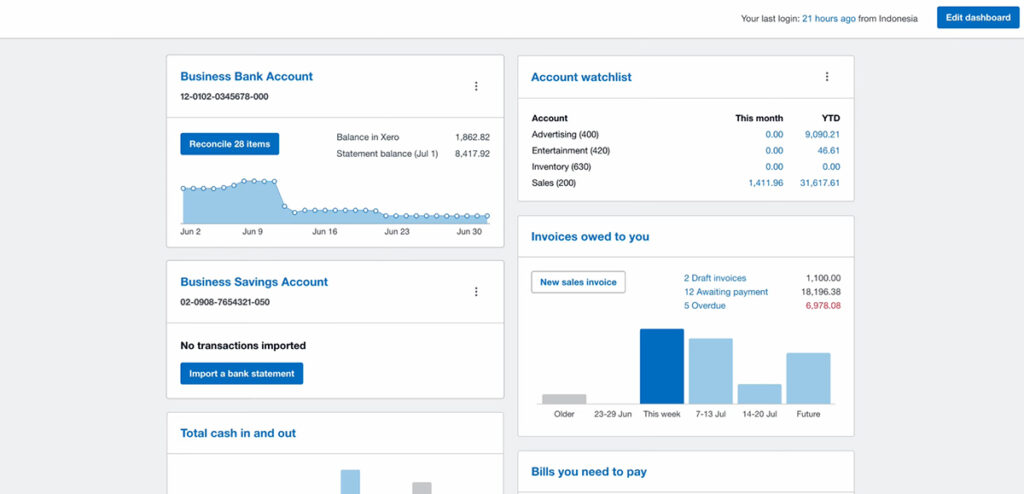
While the learning curve is a bit steeper than some entry-level tools, like Zoho Books, most sellers will find it easier to learn than alternatives like QuickBooks or Sage 50. If you do get stuck, Xero has excellent help resources, including video tutorials and callback support. Currently, their Trustpilot score sits at a very respectable 4 out of 5, with customer support being one of their biggest strengths.
Plans start at just $25/month for basic accounting tools like bank reconciliation, standard reporting, and cash flow management, with additional plans adding customizable reports and dashboards, expense tracking, and advanced analytics. It’s also worth noting that you will need a third-party tool like A2X or Link My Books to sync your Seller Central data.
While the learning curve is a touch steeper than with entry-level platforms like Zoho Books, most sellers find it easier to navigate than QuickBooks once they’re past the initial setup. And if you need help? Xero has a solid knowledge base and video tutorials, plus callback support if you ever get stuck. Still, for Amazon sellers who want powerful accounting tools with affordable pricing, Xero brings a ton of value to the table and keeps things surprisingly user-friendly while doing it.
Free Trial: Xero offers a “free month” with any plan. Once you choose a plan and enter your payment details, you will get your first 30 days free. You can cancel at any time with no charge.
Pricing: Plans start at $25 per month for the Early plan. This includes sales tax calculations, basic financial reports, and several additional features. Other plans are $55 and $90 per month, and add advanced analytics, expense claims, customizable dashboards, and more.
The best Amazon accounting software for advanced users
QuickBooks Online

QuickBooks Pros:
- Industry-standard accounting software that most bookkeepers already know
- Strong choice for sellers operating across Amazon and other channels
- Includes integrations for 650+ apps and tools
QuickBooks Cons:
- More expensive than many competitors
- Native Amazon payout and fee syncing is minimal, so I recommend using a third-party tool for Amazon integration
QuickBooks Online continues to be one of the most popular accounting platforms in e-commerce, and it’s easy to see why so many Amazon sellers continue to choose it in 2026. Accountants and bookkeepers are already familiar with it, so if you ever need help or decide to outsource your bookkeeping, the transition is relatively painless.
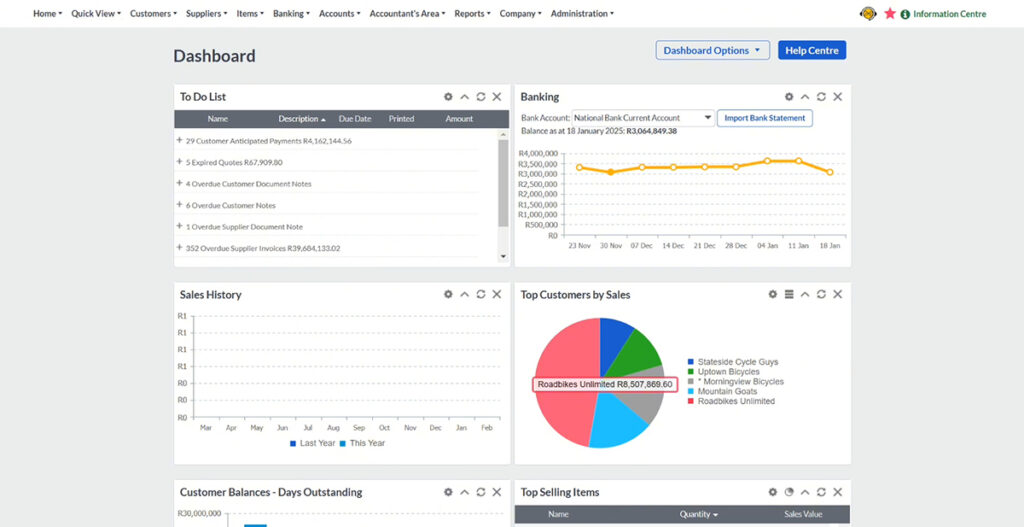
Besides that, though, QuickBooks just feels polished. The dashboard gives you a quick look at cash flow, expenses, profit, and any upcoming bills. All of the main features you’d need for day-to-day accounting are easy to find, and several automation features can help to speed up your workflow. I wouldn’t say the UI was amazing, but I didn’t have any complaints either. It gets the job done, and overall, I didn’t have any issues navigating the software.
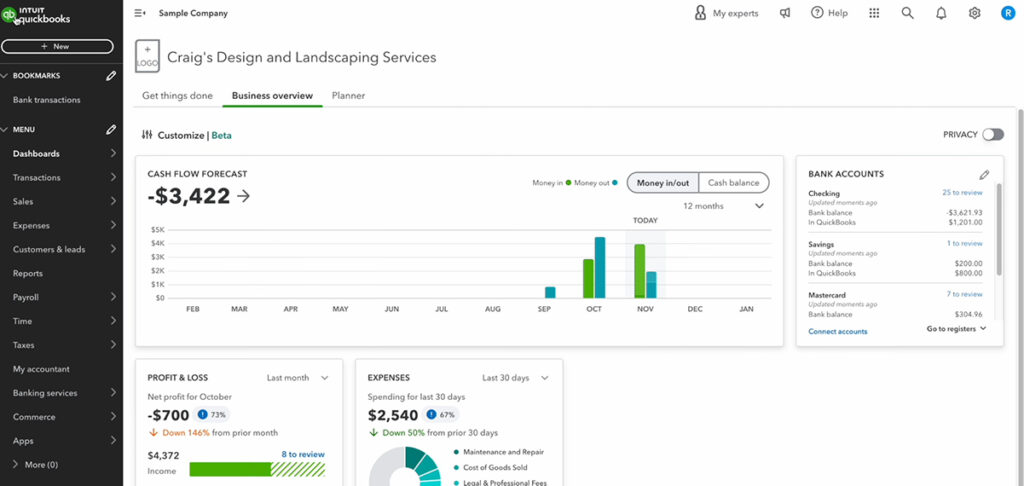
Reporting is another one of QuickBooks’ biggest strengths. Beyond basic profit and loss statements, you can also run inventory valuations, cash flow summaries, sales tax reports, and detailed expense breakdowns. Many of these can be filtered by product, fulfillment method, or sales channel. The reports are fully customizable, too, so you or your accountant can quickly get the exact numbers needed for forecasting, budgeting, or tax prep without any hassle.
There are a few drawbacks, though, that I need to mention. For one, like Xero, you’ll need a connector like A2X or Link My Books to get the most out of QuickBooks as an Amazon seller. While QuickBooks technically has a free native connector, the data it provides is very limited, and I personally recommend you avoid using it. Secondly, there is the price. The starting cost of $38/month makes it one of the most expensive tools on our list, and it might not be the best choice for new or budget-conscious sellers.
However, for established Amazon sellers, especially those with multiple sales channels, or anyone planning to work with a professional bookkeeper, QuickBooks is a reliable, industry-standard choice when it comes to accounting software.
Free Trial: QuickBooks offers a 30-day free trial once you’ve selected a payment plan.
Pricing: The Simple Start plan is $38/month and includes automated bookkeeping and bank feeds, tax deductions, and more. Additional plans are $75, $115, and $275 per month and add support for more users, multi-currency, AI-powered reconciliation, and several other advanced features.
The best budget-friendly accounting software for Amazon sellers
Zoho Books
Zoho Books Pros:
- Most budget-friendly accounting system for Amazon sellers
- Excellent automation tools that reduce manual bookkeeping
- Clean layout and beginner-friendly design that’s easy to learn
Zoho Books Cons:
- Requires a third-party tool for Amazon integration
- User limits on lower-tier plans
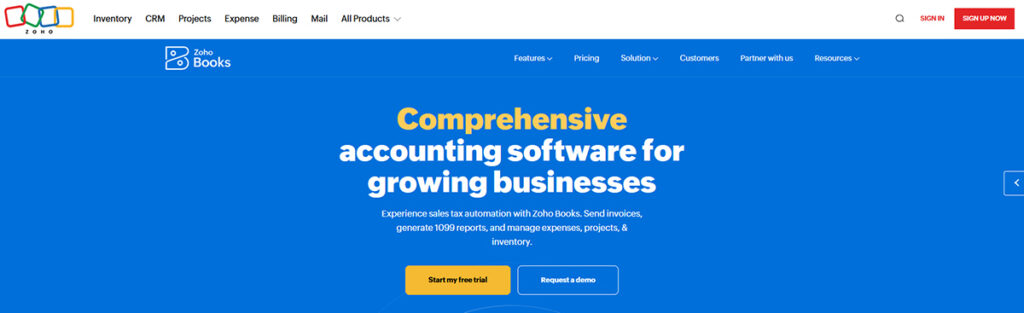
Zoho Books is one of the most affordable and beginner-friendly accounting tools available for Amazon sellers. Unlike something like QuickBooks, with its steep learning curve, Zoho Books is specifically designed with small businesses and new sellers in mind. It’s a great choice for anyone who wants reliable bookkeeping software without a premium price point.
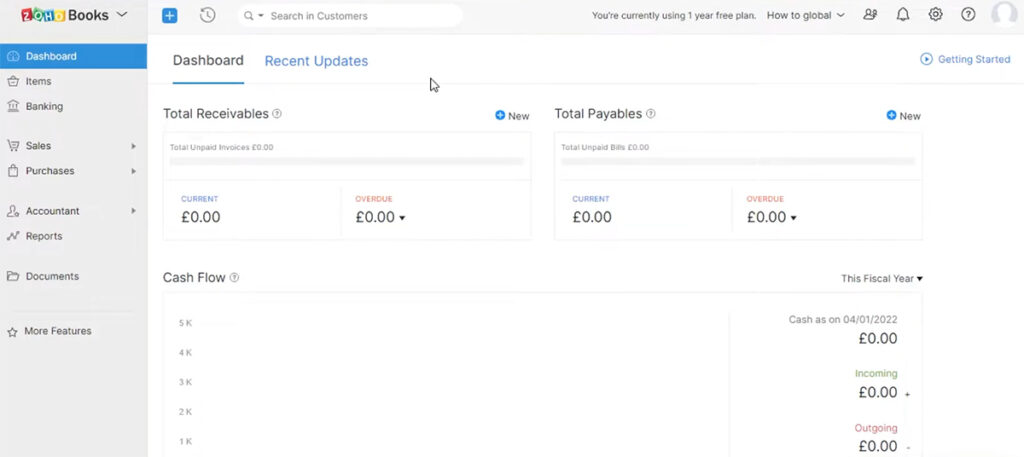
The software includes all the basics you’d expect to find in an accounting tool. You get invoicing, expense tracking, tax features, bank reconciliation, and multiple financial reports like P&L, cash flow, and balance sheets. With its beginner-friendly design, it’s easy to understand where money is coming from and where it’s going, and the dashboard feels less cluttered than most other tools in this category. You also have the option to use their mobile app for capturing receipts or tracking invoices without sitting at a desk.
However, the pricing is what gets most people in the door. If your annual revenue is under $50,000, you are eligible for Zoho’s free tier, which includes 50+ reports, expense tracking, bank reconciliation, and more. There is no time limit or restrictions; as long as your annual revenue is under 50k, you’re eligible. For paid plans, you can choose from $20, $50, or $70/month tiers, which add more users, customizable charts, inventory tracking, budget management, and a lot more.
With all that said, there are some limits to keep in mind.
For one, like most accounting software, Zoho Books doesn’t pull Amazon data directly into your account, so you’ll need a third-party connector as part of your workflow. And while the reporting is good enough for everyday bookkeeping, sellers needing deep financial analysis may find it lacking compared to QuickBooks or Xero.
Still, if you’re looking for a low-cost option to handle all your day-to-day bookkeeping needs, Zoho Books is a tool I highly recommend.
Free Trial: Zoho Books offers a 14-day free trial with no credit card or payment info required.
Pricing: Zoho Books offers a 100% free pricing tier, which includes standard accounting features and basic reporting for users with less than $50,000 in annual revenue. Their paid plans start at $20/month and offer several additional features and access for up to 3 users.
The best accounting software for multiplatform sellers
Sage 50
Sage 50 Pros:
- Extremely customizable/in-depth reporting
- Desktop software with optional cloud access
- Excellent inventory tracking for larger Amazon businesses
Sage 50 Cons:
- Outdated interface compared to modern accounting tools
- Premium pricing
- Requires a third-party tool for Amazon integration
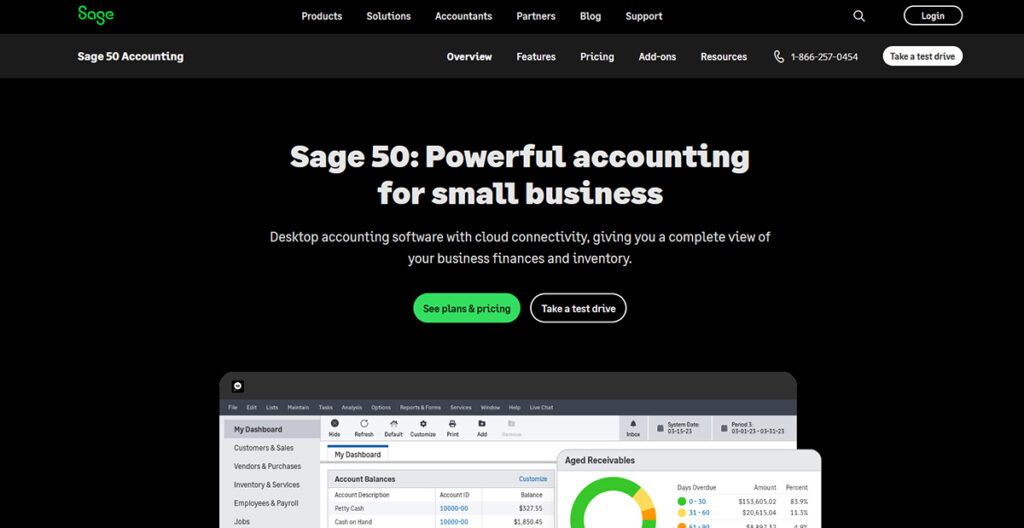
Sage 50 is my recommendation for Amazon sellers managing larger, more complex businesses, especially if you have multiple sales channels or store inventory in multiple warehouses. It’s designed for larger teams looking for more detailed financial analysis than most standard cloud-based tools have to offer. It also includes some of the most sophisticated inventory tracking tools available.
Their inventory management features include in-depth reporting that supports FIFO, LIFO, average costing, multi-location inventory, and detailed stock reporting. When I first tried out Sage 50 a couple of years ago for a separate project, the level of customization and flexibility stood out right away. You can track movement, costing, and adjustments all in a way that feels closer to an ERP than small business accounting software.
Sage 50 is also a bit unique in that it uses a hybrid setup. The main software runs on your desktop, but you still have cloud-based features that allow you to create backups or access your data remotely. This can be great for larger teams since it tends to avoid a lot of the slowdown issues that can happen when everything runs in the cloud.
When it comes to downsides for Sage 50, there are a few I noticed right away. For one, the UI and design feel very dated. I didn’t have any issues navigating the software, but it was very noticeable that the menus, navigation, and layout haven’t been updated in some time. There is also the issue of price. Sage 50 is the most expensive software on our list, which makes it better suited to established brands than new sellers. Also, much like the other tools on our list, Sage 50 doesn’t come with a built-in Amazon integration, so you will need a connector to pull in all of your data from Seller Central.
With all this said, Sage 50 offers a level of depth that you will not find in typical small business software. This makes it a great fit for sellers looking for powerful inventory control and some of the most detailed financial insights on the market today.
Free Trial: Sage 50 offers a 30-day free trial with no credit card or payment info required.
Pricing: The Pro Accounting plan is $69.42 per month ($702 per year) and requires a one-year subscription. This includes support for a single user, basic reporting, bank reconciliation, desktop and cloud features, inventory management, and more. Additional plans are $114.33 and $198.42 per month, and support more users and many advanced features.
The best Amazon accounting connector for accurate financial reconciliation
A2X
A2X Pros
- Extremely accurate Amazon settlement reconciliation
- Correct handling of Marketplace Facilitator Tax
- Strong integrations with QuickBooks and Xero
A2X Cons
- Pricing increases quickly for multi-channel or high-volume sellers
- Setup and account mapping can feel time-consuming for beginners
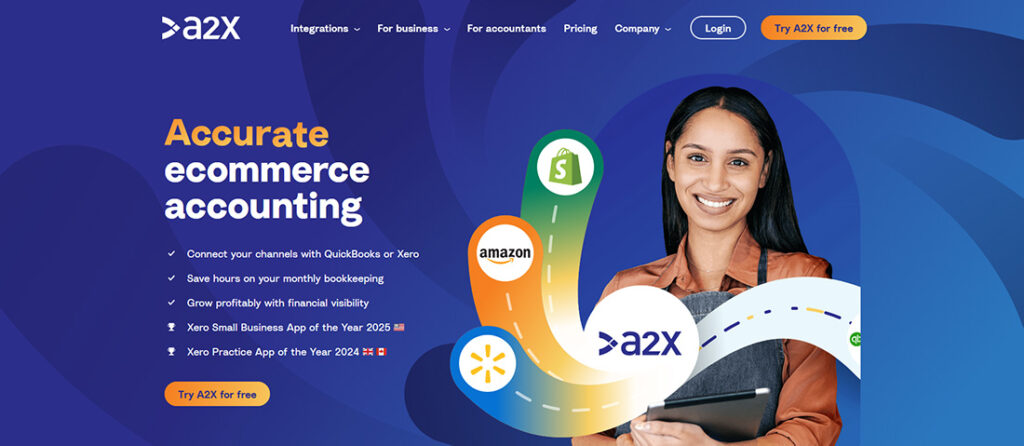
A2X is the first “connector software” on our list, and once you understand what it does, it becomes one of the most important tools you can add to your business. Its purpose is to take Amazon’s messy settlement files and convert them into clear, organized entries that land in your accounting software exactly the way your accountant wants to see them. If you’ve ever tried to reconcile payments by hand, you’ll notice the difference immediately.
As someone who did this myself, I can tell you firsthand the amount of time that tools like A2X and the next entry on our list save. A2X takes all of your settlement data and breaks it down by revenue, fees, and taxes with an incredible amount of accuracy. It offers native integrations with both Xero and QuickBooks, but it also works with Zoho and Sage.
One of the most important features that A2X excels in is accuracy. It splits settlements across months properly, posts COGS entries based on your preferred costing method, and keeps payouts aligned with the date the revenue actually occurred. Most tools that try to combine accounting and analytics tend to get these details wrong because Amazon’s payout schedule rarely matches the actual calendar month, but A2X has continued to earn its excellent reputation for accurate data year after year.
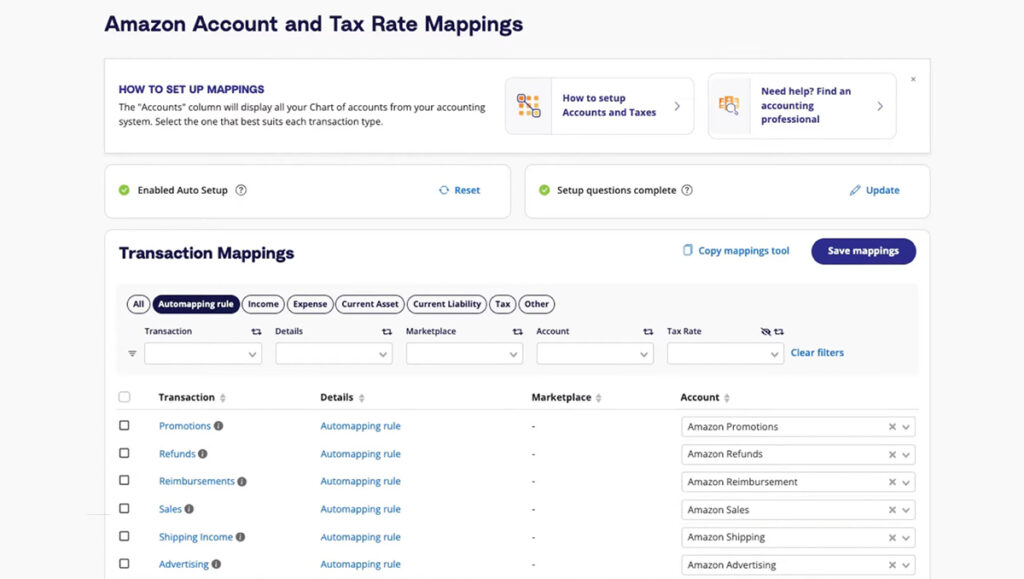
It’s worth mentioning that there is some setup involved, which could be confusing for some users. You’ll need to map your accounts carefully, and the first update takes some time, especially if your chart of accounts isn’t fully organized. The good news is, once you’ve got it set up once, the maintenance is very minimal.
For sellers who want to keep their books as accurate as possible, without doing everything by hand, A2X is one of the most reliable and highly recommended tools available.
Free Trial: A2X offers a 30-day free trial with access to all core features.
Pricing: Plans start at $29 for up to 200 orders per month. Additional plans are $59, $79, and $159 per month and add COGS tracking, FBA inventory locations, and higher order volumes.
The best value-focused accounting connector for Amazon sellers
Link My Books
Link My Books Pros
- Fast and simple setup using the guided tax wizard
- Affordable alternative to A2X with similar accuracy
- Strong VAT and international tax support
Link My Books Cons
- Must manually downgrade plans if order volume decreases
- Set up may require help if you have no accounting experience
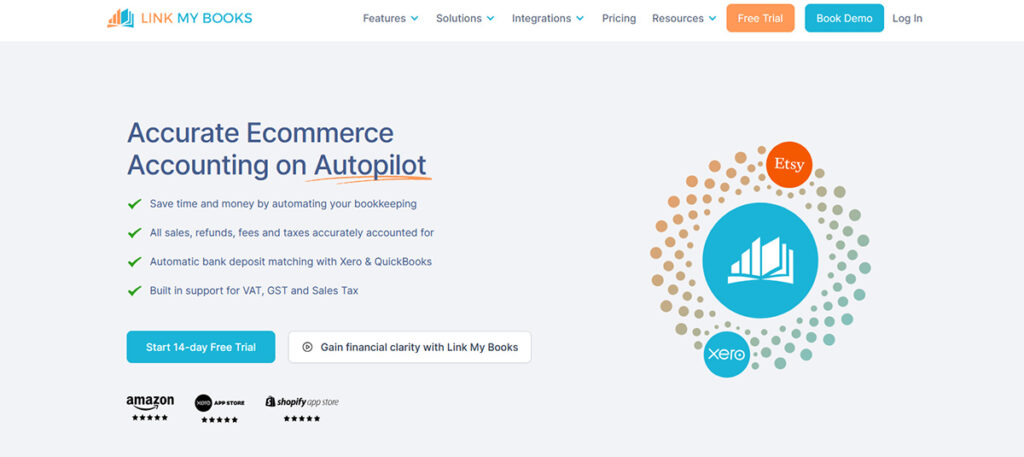
Link My Books is the second connector software on our list, and while A2X is the pricier, more advanced option, Link My Books is the beginner-friendly, more affordable option.
One of the first ways that Link My Books stands out is the setup. Where A2X can be a bit complicated and take some getting used to, Link My Books is quick, easy, and only takes a few minutes. The software does a lot of the heavy lifting by identifying which fees apply, mapping tax categories, and automatically suggesting the right accounts. As someone who has tested a lot of different tools, I really appreciated just how streamlined and simple the entire process was.
Another big reason Link My Books appeals to a lot of sellers is its pricing. Plans are based on your monthly sales and sales channels, but in general, it’s very affordable ($41/month for up to 1000 orders on Amazon) and cheaper than A2X.
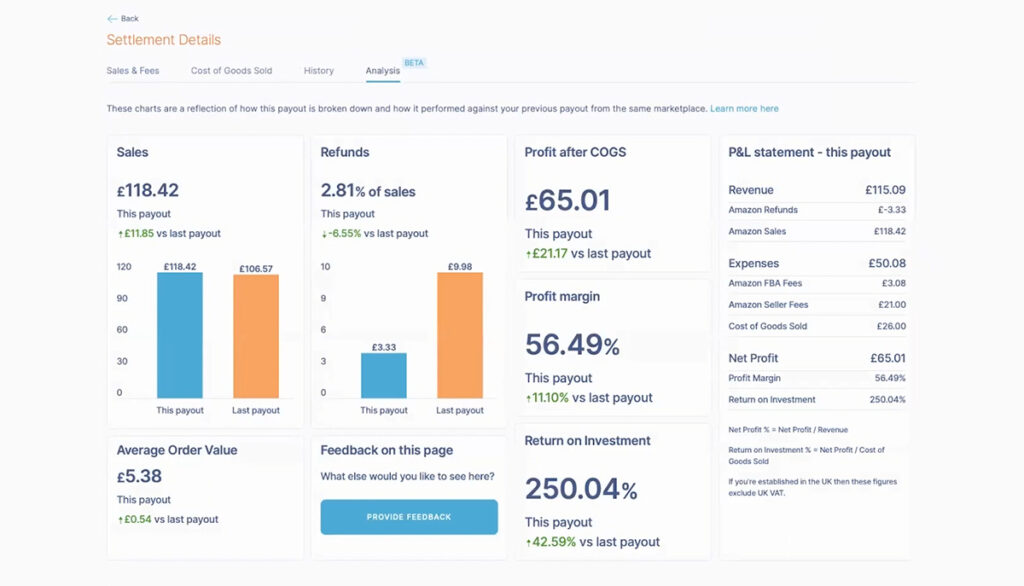
When it comes to features, Link My Books covers all of the basics like accurate settlement breakdowns, proper tax handling, and basic analytics. Their analytics tools aren’t going to replace a premium analytics software, but you can view profit breakdowns by channel, see how your fee ratios compare to similar sellers, and spot refund trends that might be an issue.
There are a few things worth mentioning. For one, Link My Books records revenue based on Amazon payout dates instead of splitting settlements by sale month, which can matter if you need audit-ready financials or detailed month-end reporting. It also requires manually entering COGS, which can get tedious if you have a large catalog. In these two cases, A2X might be the better choice.
For most Amazon sellers, though, Link My Books is a great all-around connector software. It’s affordable, super easy to set up, and makes bookkeeping a whole lot easier. If you want organized financials at a budget-friendly price, Link My Books is a strong option.
Free Trial: Link My Books offers a 14-day free trial with full access to all core features and no credit card required.
Pricing: Link My Books does not have set payment plans. Costs are based on the number of orders processed and the number of sales channels you use. For example, a business with 1 sales channel and 250 monthly orders would be charged $31/month. For 2 sales channels and 1000 monthly orders, the cost would be $47 per month.
The best dedicated Amazon financial insights tool
Sellerise
Sellerise Pros:
- Accurate Amazon-specific profit and fee tracking
- Clear, real-time financial dashboards for Amazon sellers
- Manual Adjustments tool for adding non-Amazon business expenses
Sellerise Cons:
- Not a replacement for full accounting software
- No direct integration with QuickBooks or Xero
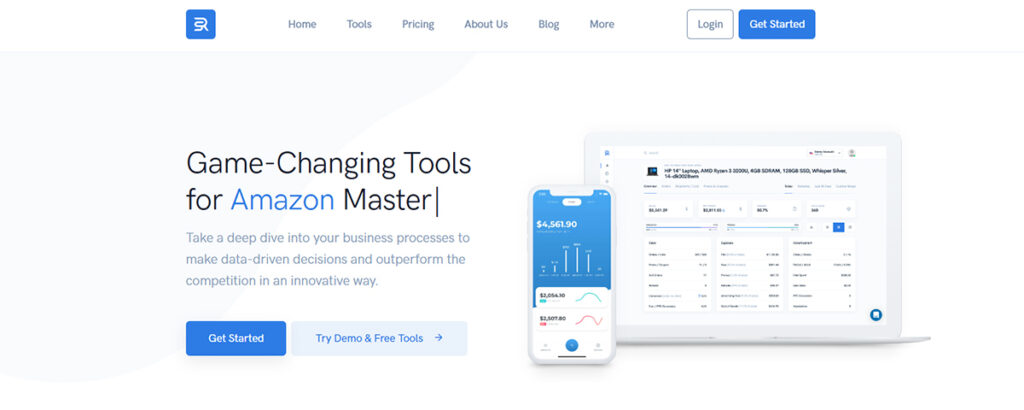
Sellerise is the only tool on this list built specifically for Amazon sellers, and it serves a very different role than something like Xero or QuickBooks. Instead of trying to replace your accounting software, Sellerise offers users a ton of high-quality reports to help you understand your fees, profitability, cash flow, and product-level performance, without forcing you to manually sort through Seller Central data.
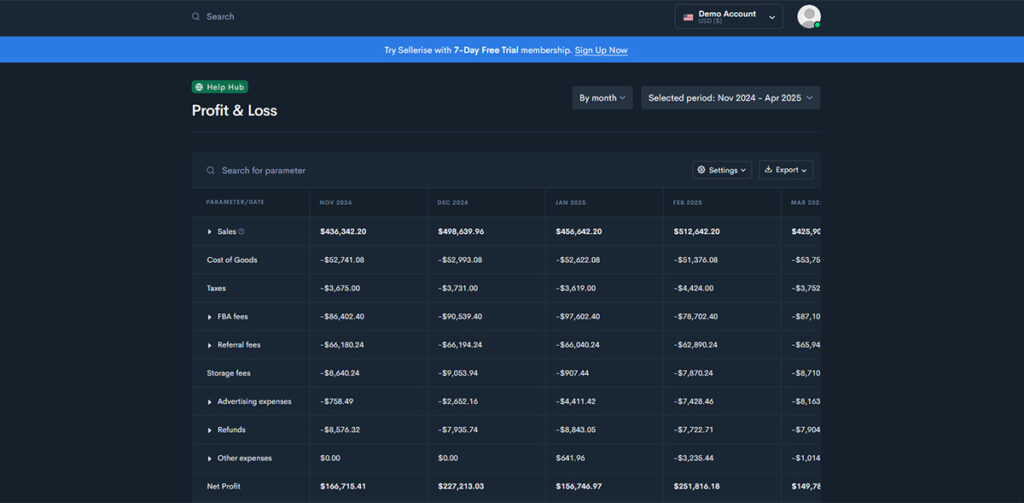
The Sales & Profit dashboard is a great way to see what’s actually happening in your business. It breaks down referral fees, FBA fees, refunds, PPC spend, and storage costs in a way that general accounting software just cannot do as well. The P&L and Payouts sections show you the disbursement breakdown and which products are over- / underperforming. There is also an ABC analysis tool, an Amazon FBA Reimbursement Tool, a Subscribe and Save dashboard, inventory tracking, and more. Also, it’s worth noting that all of the data updates in real time, so it’s easier to catch potential issues right away instead of waiting until month-end.
Outside of financial analysis, Sellerise also includes tools for keyword research, review analysis, and FBA reimbursements. Plans start at just $19.99 per month for their suite of financial dashboards and customizable alerts. Additional plans add more features like their reimbursement tool and advanced keyword analysis.
While it’s not a replacement for tools like Xero or QuickBooks, as an Amazon-native tool that helps you understand your margins and track financial data, Sellerise is well worth a look.
Free Trial: Sellerise offers a 7-day free trial with no credit card or payment info required.
Pricing: Plans start at $19.99/month for the starter plan, which includes access to all of the financial tools along with keyword tracking, automated alerts, and additional features.
Frequently Asked Questions (FAQs)
Do Amazon sellers really need both accounting software and a connector like A2X or Link My Books?
If you have the budget, I highly recommend using both. Accounting software like Xero or QuickBooks is where your full business lives, including income, expenses, bank account tracking, and tax reports. A connector, like A2X and Link My Books, sits between Amazon and that software, taking each payout and organizing it by sales, fees, refunds, and taxes so everything posts correctly.
Without a connector, you end up guessing which part of a payout is profit versus fees. From my own experience, the difference between using a connector and not is night and day. It’s way less time spent manually adjusting your books, and much more organized financial tracking.
When should I move from spreadsheets to dedicated accounting software for my Amazon business?
A general rule of thumb is that you should usually have a dedicated accounting software by the time you’re around the 30k to 50k revenue mark, or when reconciling payouts starts taking up more of your time than you want to spend.
Spreadsheets can work when you’re just starting, but they can become a headache as your business grows with more costs, fees, and products. You end up spending way too much time manually adjusting your books, and there is a much higher risk of mistakes or costly errors.
Should Amazon sellers use cash basis or accrual accounting?
Accrual accounting works better for most Amazon sellers because it lines up your sales and related costs in the same time period, giving a clearer view of how your business is performing. Cash basis depends on payout timing, which can make busy months look slow and slow months look profitable.
Most accountants recommend accrual accounting for e-commerce because it produces cleaner, more stable financial reports as your business grows.
What’s the best accounting setup if I sell on Amazon, plus other channels like Shopify or Walmart?
Most multi-channel sellers I know use QuickBooks Online or Xero, along with a connector like Link My Books, because it pulls all of your sales, fees, refunds, and taxes from every channel into one place. This gives you a clear view of your business from a single dashboard, while still being able to separate your results by marketplace.
The benefit of having all of your sales channels pre-organized into your accounting software makes it really easy to keep track of your business as a whole, and is well worth the cost of using a connector software.
Do I still need an accountant or bookkeeper if I use Amazon accounting software?
Yes, I highly recommend using a professional accountant or bookkeeper, even if you have dedicated Amazon FBA accounting software. While you may not need one early on, these professionals become extremely helpful once things start to get more complicated and you start selling on multiple channels.
Software tools can automate data entry, but they cannot file taxes, review for errors, or give you meaningful advice when things get complicated. I rely on my accounting software every single day, but I still have an accountant review everything regularly to save me from any potential mistakes.
Choosing the Right Accounting Software for Your Amazon Business
Choosing the best accounting software for Amazon sellers is all about finding the tool that makes your numbers easier to understand, helps you stay organized, and gives you a clear picture of what is actually happening inside your business. Each of the seven tools in this guide helps to solve this problem in a slightly different way, whether you need simple bookkeeping, automated reconciliation, or a connector to organize all of your Amazon data and fees.
If you’re unsure where to start, I recommend choosing a reliable full-service accounting software, such as Xero or QuickBooks, before worrying about connectors or additional financial tools like Sellerise. Then, as your business grows, you can start to consider more advanced tools and setups to manage your books.
Related Articles
- 7 Best SEO Tools for Amazon Sellers in 2026
- 21 All-Time Best Tools for Amazon FBA
- 7 Best Amazon FBA Inventory Software in 2026

Levi Adler is an experienced Amazon seller, e-commerce specialist, and the founder of Levi’s Toolbox. With over a decade in the trenches selling on Amazon and managing his own Shopify stores, Levi writes from his own experience. Sharing what worked, what flopped, and the strategies he wishes he’d known sooner. When he’s optimizing listings or managing ad campaigns, you’ll find Levi hitting mountain bike trails or hanging out with his two huskies, Emma and Scout.